

Table of Contents
Introduction
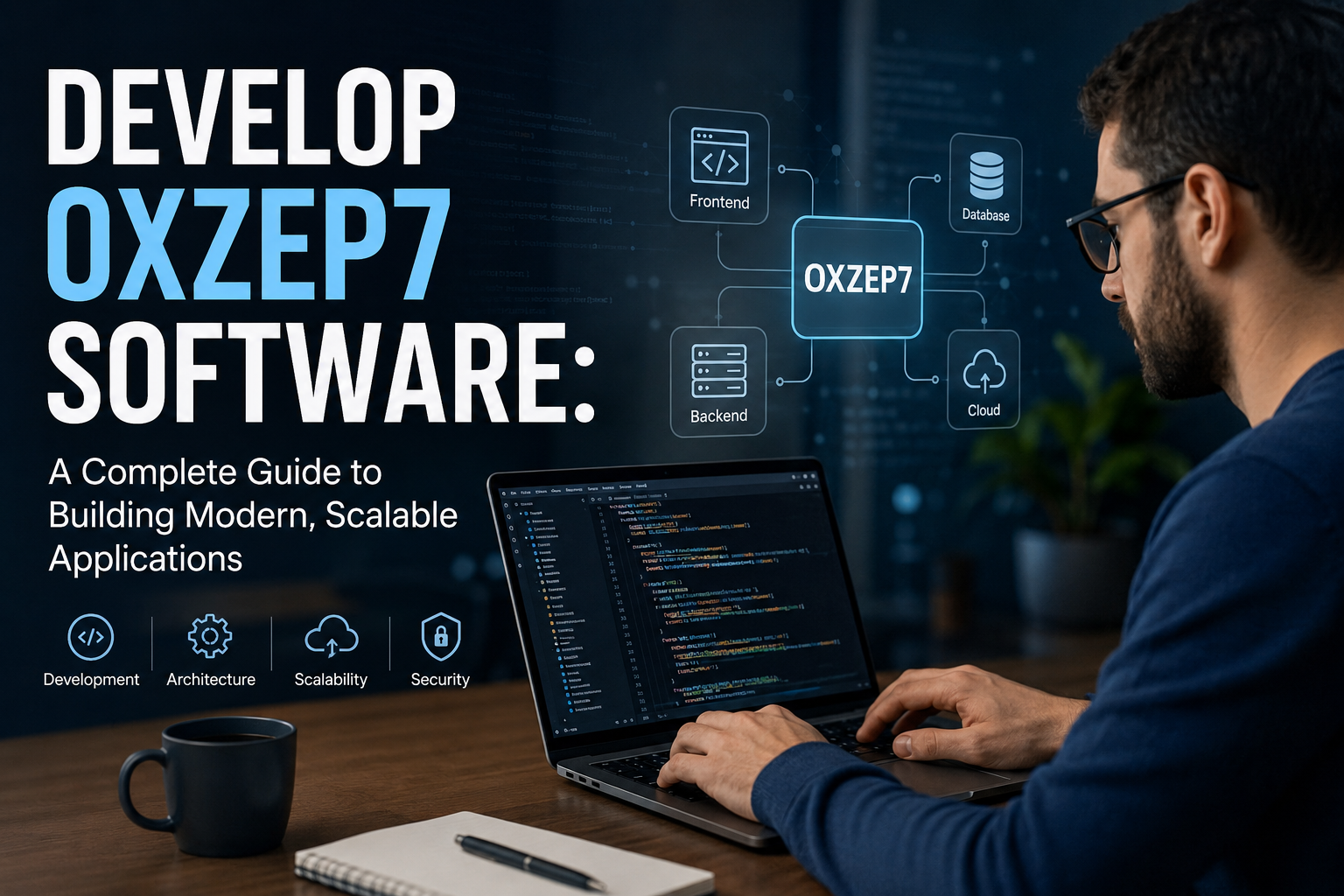
To develop oxzep7 software effectively, it is important to begin with a clear understanding of what the term represents in your particular project. The name “Oxzep7” does not appear to have one universally recognized public specification, programming language, or mainstream framework. Current online references use the term in different ways, including as a conceptual software architecture, a custom development environment, and a framework-style approach to modular applications.
That distinction matters because software development should never begin with assumptions. When a project is called Oxzep7, the first priority should be defining its purpose, users, required features, data requirements, security expectations, and deployment environment.
In practical terms, develop oxzep7 software can be approached as a structured software-development project focused on modularity, reliability, automation, maintainability, and scalability. Rather than trying to force an imaginary or undocumented technology stack into the project, developers should choose technologies according to the actual requirements.
This guide explains how to approach the development process, how to plan the architecture, which technologies may be appropriate, how security and testing should be handled, what mistakes to avoid, and how to take an Oxzep7-style application from an initial concept to a maintainable production system.
What Does Develop Oxzep7 Software Actually Mean?
The phrase develop oxzep7 software is best treated carefully because there is no single universally verified definition that every developer can rely on. Some online discussions describe Oxzep7 as a modular or enterprise-oriented development concept, while other pages present it as a custom application or protocol-style system.
For a real project, the name is less important than the engineering principles behind it.
A useful interpretation is to think of Oxzep7 software as a customizable digital system designed around clearly separated components. The application can contain a user interface, business logic, databases, APIs, automation processes, authentication, reporting, integrations, and administrative tools.
The advantage of this approach is flexibility. Instead of creating one enormous application where every feature depends on every other feature, the system can be divided into logical modules. This makes development easier to manage and future changes less risky.
When you develop oxzep7 software, therefore, the goal should not simply be to produce something that works today. The objective should be to create software that can continue working as users, data, integrations, and business requirements grow.
Why Proper Planning Matters Before You Develop Oxzep7 Software

Many software projects encounter problems because development starts before the problem has been properly defined. Developers begin creating screens, databases, and APIs without knowing exactly what the finished product is supposed to accomplish.
A better approach begins with requirements.
Suppose an Oxzep7 project is intended for business automation. The development team needs to understand which tasks are currently manual, which departments will use the system, what information must be stored, and which external platforms need to communicate with it.
If the software is intended for customers, the priorities may change. User experience, performance, account management, privacy, notifications, payments, and customer support could become central requirements.
The same principle applies to internal applications. A system designed for employees may need detailed permissions, reporting, audit records, document management, workflow automation, and administrative controls.
Before you develop oxzep7 software, every major feature should have a reason for existing. This prevents feature creep and keeps development focused on measurable outcomes.
Core Planning Areas for an Oxzep7 Project
A strong development plan connects business requirements with technical decisions. The following table provides a practical framework for thinking about the project before implementation begins.
| Development Area | Key Question | Desired Outcome |
| Project purpose | What problem will the software solve? | Clear product objective |
| Target users | Who will use the system? | Defined user profiles |
| Core features | What must the first version accomplish? | Focused MVP |
| Data | What information must be stored? | Reliable data model |
| Integrations | Which external systems are required? | Integration strategy |
| Security | What information needs protection? | Security architecture |
| Scalability | How much growth is expected? | Appropriate infrastructure |
| Maintenance | Who will maintain the system? | Long-term support plan |
This planning stage can save considerable time later. A few hours spent clarifying requirements can prevent weeks of development work based on incorrect assumptions.
Choosing the Right Architecture to Develop Oxzep7 Software
Architecture determines how the different parts of the application communicate and how easily the system can evolve.
For a small application, a modular monolith can be an excellent starting point. The application remains one deployable system, but its internal code is separated into clearly defined modules.
For example, authentication, customer management, billing, reporting, notifications, and administration can each have their own logical boundaries. This approach provides many benefits of modular architecture without immediately introducing the operational complexity of distributed services.
For larger systems, microservices may become appropriate. In a microservices architecture, individual capabilities can operate as independent services and communicate through APIs or messaging systems. Some current material discussing Oxzep7-style systems emphasizes modular architecture, APIs, asynchronous processing, and cloud deployment.
However, microservices should not be selected simply because they sound modern.
A poorly designed microservices system can be harder to operate than a well-designed monolith. Distributed logging, network failures, deployment coordination, service discovery, authentication, and data consistency all introduce additional complexity.
My opinion is that the best way to develop oxzep7 software is to start with the simplest architecture capable of meeting the expected requirements. If a modular monolith can handle the first stage of the product, it may be a better choice than immediately creating ten separate services.
Designing the Backend
The backend is responsible for processing business rules, managing data, handling authentication, communicating with external services, and exposing APIs.
A Python-based backend can be useful when the project includes automation, data processing, artificial intelligence, or rapid application development. Frameworks such as FastAPI and Django can provide different approaches depending on the application’s needs.
Java and Spring Boot can be suitable for larger enterprise systems where strong typing, mature tooling, and extensive enterprise ecosystem support are important.
Node.js can be useful for applications that need efficient handling of many concurrent I/O operations, particularly when the development team already has strong JavaScript or TypeScript experience.
The important point is that there is no universally correct “Oxzep7 programming language.” The technology should follow the project rather than the project being forced to follow a particular technology.
Frontend Development for Oxzep7 Applications
The frontend is where users interact with the application, so its quality has a direct effect on how people perceive the software.
React, Angular, and Vue are common choices for modern web applications. The correct option depends on the application’s complexity and the team’s existing expertise.
A good Oxzep7-style frontend should communicate clearly with the backend through documented APIs. User interface components should remain separated from business logic whenever practical.
For example, a dashboard should display information rather than independently implementing complicated business rules. Those rules should normally live in a controlled backend or domain layer where they can be tested consistently.
Responsive design is also important. Even if an application is initially designed for desktop users, mobile and tablet compatibility can significantly improve accessibility.
Database Design and Data Management
A reliable database is one of the foundations of any serious software project.
PostgreSQL is a strong general-purpose option for applications requiring relational data, transactions, complex queries, and data integrity. MySQL can also be appropriate for many conventional web applications.
For highly flexible document-oriented data, a NoSQL database may sometimes be suitable. Redis can be useful as a caching layer or for temporary high-speed data access.
The database should not simply be created around the screens. It should reflect the underlying business entities and relationships.
For example, a customer management system might contain customers, accounts, contacts, transactions, permissions, and activities. Proper relationships between those entities can make reporting and data integrity much easier to maintain.
When you develop oxzep7 software, database design should also consider future changes. Fields that are likely to evolve should be handled carefully, and destructive schema changes should be planned rather than performed casually in production.
API Design and Integration
APIs allow different components of the software ecosystem to communicate.
A well-designed API should have predictable endpoints, consistent authentication, meaningful error responses, appropriate validation, and clear documentation.
REST remains a practical choice for many applications. GraphQL can be useful when clients need flexible data queries, while gRPC can make sense for certain internal service-to-service communication requirements.
Integration design is particularly important when Oxzep7 software must communicate with payment providers, CRM systems, accounting platforms, cloud services, messaging platforms, or third-party databases.
External services can fail, change their APIs, become unavailable, or return unexpected data. Therefore, integrations should include sensible timeout handling, retries where appropriate, validation, logging, and failure recovery.
Security When You Develop Oxzep7 Software
Security should be part of the architecture from the beginning rather than something added immediately before launch.
Authentication determines who can access the system, while authorization determines what each authenticated user is allowed to do.
Role-based access control can be useful when different users require different permissions. For more complex systems, permissions may need to be associated with individual resources, departments, organizations, or actions.
Passwords should never be stored as plain text. Sensitive communication should use properly configured encryption, and confidential information should be protected both during transmission and at rest where appropriate.
Input validation is equally important. Every value received from a user, API, file, or external integration should be treated as untrusted until it has been validated.
Security testing should also cover common application risks such as broken access control, injection vulnerabilities, insecure authentication, exposed secrets, unsafe file uploads, and poor session management.
Authentication and Permission Architecture
Authentication becomes more complicated as an application grows.
A basic application may use email and password authentication. Larger systems might integrate single sign-on, multifactor authentication, identity providers, or organization-based access.
The permission model should be designed before the system becomes large. Retrofitting permissions into an application that originally assumed every authenticated user could access everything can be difficult.
A good approach separates identity from authorization. Knowing who a person is does not automatically mean that person should have permission to perform every action.
For enterprise-oriented Oxzep7 projects, auditability can also be important. The system may need to record important administrative actions, permission changes, data modifications, and security events.
User Experience and Interface Design
A technically powerful application can still fail if users find it confusing.
Good interface design begins with understanding what users are trying to accomplish. A dashboard should prioritize meaningful information rather than simply filling the screen with charts.
Forms should provide understandable labels and useful validation messages. Errors should explain what went wrong and, where possible, what the user can do to fix the problem.
Performance also affects user experience. A page that takes several seconds to respond repeatedly can make otherwise excellent software feel unreliable.
When you develop oxzep7 software, usability should therefore be considered a technical requirement as well as a design concern.
Testing Strategy for Oxzep7 Software
Testing is one of the strongest safeguards against expensive production problems.
Unit testing verifies individual functions or components. Integration testing checks whether different components communicate correctly. End-to-end testing examines complete user workflows.
Performance testing becomes important when the system is expected to handle significant traffic or large datasets.
Security testing should examine authentication, authorization, input validation, session handling, and data exposure.
A useful testing philosophy is to test the behavior that matters most rather than trying to achieve an arbitrary percentage of code coverage. A project with high coverage but weak tests can still contain serious defects.
Development Environment and Version Control
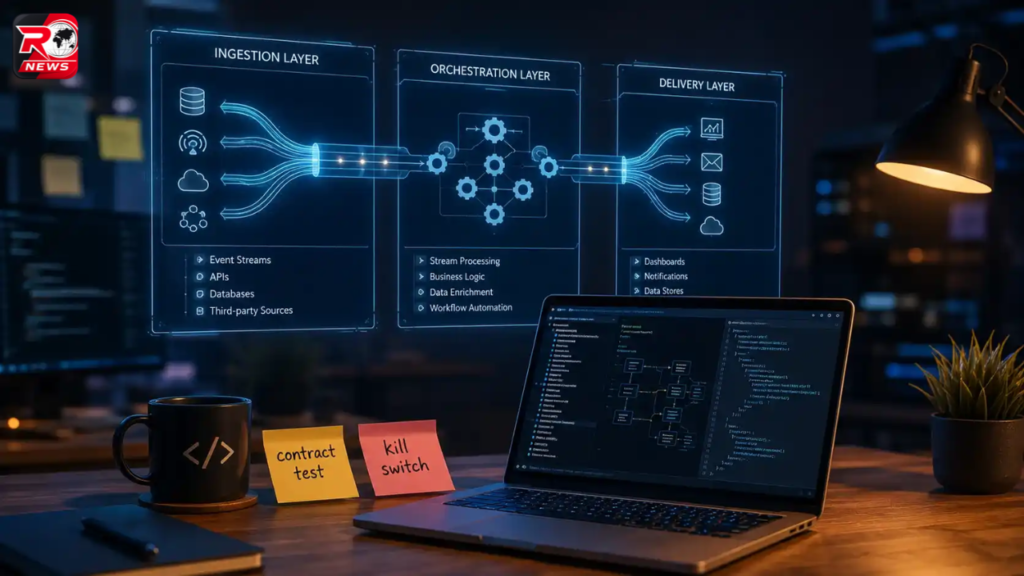
A consistent development environment makes collaboration easier.
Git should be used to track changes, while a shared repository can provide a central place for source code, documentation, issues, and collaboration.
Developers should separate development, testing, staging, and production environments. Production credentials should never be casually stored in source code.
Environment variables or dedicated secret-management systems can be used for configuration and sensitive credentials.
Automated formatting, linting, static analysis, and testing can also be integrated into the development workflow.
These practices may seem small, but together they create a more predictable environment for teams working to develop oxzep7 software.
Recommended Technology Stack
The following table shows one possible technology strategy. It should be treated as a starting point rather than an official Oxzep7 specification.
| Layer | Possible Technology | Primary Purpose |
| Frontend | React, Vue, or Angular | User interface |
| Backend | Python, Java, or Node.js | Business logic and APIs |
| Database | PostgreSQL or MySQL | Structured data |
| Cache | Redis | Fast temporary access |
| API | REST, GraphQL, or gRPC | System communication |
| Containers | Docker | Consistent deployment |
| Version control | Git | Source management |
| CI/CD | GitHub Actions, GitLab CI, or Jenkins | Automated delivery |
| Monitoring | Prometheus and Grafana | System observability |
| Cloud | AWS, Azure, or Google Cloud | Infrastructure |
The ideal stack depends on the application’s requirements, developer expertise, budget, expected traffic, compliance requirements, and long-term maintenance strategy.
Automation and Intelligent Workflows
Automation can be one of the most valuable capabilities in a modern software system.
Instead of requiring employees to repeatedly perform the same tasks, software can automatically validate information, trigger notifications, generate reports, synchronize records, or move work between stages.
A workflow engine can make these processes configurable. Rather than hardcoding every possible business process, the system can store rules and states in a structured way.
This becomes especially useful when business policies change frequently.
For example, an approval process might initially require one manager. Later, the organization may require two approvals for high-value transactions. If the workflow is configurable, such a change can potentially be handled through configuration rather than rewriting the entire application.
Cloud Deployment and Infrastructure
Cloud deployment provides flexibility, but it does not automatically make software scalable.
A production deployment should consider compute resources, database infrastructure, backups, networking, monitoring, logging, secrets, access control, and disaster recovery.
Containers can make deployments more consistent by packaging the application and its dependencies together.
Kubernetes can be useful for complex systems that genuinely need container orchestration, but smaller projects may not need that level of infrastructure. Managed cloud services can sometimes provide a simpler alternative.
The best deployment strategy is the one the team can operate reliably.
Performance Optimization
Performance should be measured rather than guessed.
Before optimizing an application, developers should identify where time and resources are actually being spent. Slow database queries, excessive API calls, inefficient algorithms, large frontend assets, and unnecessary network traffic can all create performance problems.
Caching can reduce repeated database work. Database indexes can improve frequently used queries. Asynchronous processing can move non-critical operations away from the main request path.
However, optimization should not compromise maintainability without a clear reason.
My opinion is that premature optimization is particularly dangerous in a new Oxzep7 project. First make the architecture understandable and correct. Then use real measurements to determine where optimization provides the greatest value.
Monitoring and Maintenance
Launching the application is not the end of development.
Production software needs monitoring so the team can identify errors, performance degradation, unusual traffic, failed integrations, and infrastructure problems.
Application logs should provide enough context to understand failures without exposing sensitive information.
Metrics can reveal trends such as increasing response times, database utilization, memory consumption, or error rates.
Backups should also be tested. Having a backup that cannot actually be restored is not a dependable recovery strategy.
Regular dependency updates, security reviews, database maintenance, and technical debt management help keep the application healthy over time.
Common Mistakes When You Develop Oxzep7 Software
One common mistake is assuming that the term Oxzep7 automatically defines the entire technical architecture. Because publicly available references use the term inconsistently, developers should establish their own project specification rather than relying on unsupported claims.
Another mistake is choosing technologies before understanding requirements. A popular framework may be excellent but still unsuitable for a particular team or workload.
Building too many features in the first release is another frequent problem. A focused minimum viable product allows developers to validate the idea before investing heavily in advanced functionality.
Ignoring security until the final stage can create expensive redesign work. Authentication, authorization, validation, logging, and secure configuration should be incorporated from the beginning.
Poor documentation is also costly. A project that only its original developer understands becomes difficult to maintain when team members change.
Cost Factors for Developing Oxzep7 Software
The cost of developing software depends on much more than the number of screens.
Complex integrations, advanced permissions, artificial intelligence, mobile applications, high availability, compliance requirements, analytics, and large-scale infrastructure can significantly increase development effort.
The development team’s location and experience also influence cost.
A small internal application may require relatively modest resources, while an enterprise platform with multiple integrations and strict security requirements can require a substantial engineering team.
A useful approach is to divide the project into phases. The initial version should focus on proving the core concept and delivering the most important user value. Additional features can then be introduced based on real user feedback.
How to Make an Oxzep7 Project Future-Ready
Future-proofing does not mean predicting every technology trend.
Instead, it means designing the software so reasonable changes can be made without rebuilding the entire system.
Clear module boundaries, documented APIs, automated tests, maintainable code, database migration strategies, centralized configuration, and sensible observability all contribute to long-term flexibility.
The architecture should also avoid unnecessary vendor lock-in when portability is an important business requirement.
Documentation should explain not only what the software does, but why important architectural decisions were made. This gives future developers the context they need when modifying the system.
A Practical Development Workflow
A strong workflow for develop oxzep7 software starts with discovery and requirements analysis. Once the problem and users are understood, the team can define the minimum viable product.
Architecture comes next. The team should determine how data will move through the application, where business rules will live, how authentication works, and how external services will be integrated.
Development should then proceed incrementally. Instead of waiting until the entire system is complete, the team can build small functional sections, test them, review them, and improve them.
Continuous testing should accompany development. Staging environments can be used to validate releases before production deployment.
After launch, analytics, monitoring, and user feedback should influence future development.
This iterative approach makes the project more adaptable and reduces the risk of spending months building functionality that users ultimately do not need.
My Opinion on Develop Oxzep7 Software
In my opinion, the most important thing to understand about develop oxzep7 software is that the name itself should not become more important than the actual software problem.
There are many online descriptions of Oxzep7, and they do not all agree about what it is. Some describe it as a framework, others as an architecture, protocol, or custom business system.
That uncertainty is actually a useful reminder for developers: do not build based on a buzzword.
Define the required functionality first. Choose technologies that your team can maintain. Keep the architecture understandable. Build security into the foundation. Test continuously. Measure performance instead of making assumptions.
If those principles are followed, an Oxzep7 project can become a useful and adaptable software platform regardless of the exact interpretation of the name.
Frequently Asked Questions About Develop Oxzep7 Software
What does develop oxzep7 software mean?
Develop oxzep7 software generally refers to designing and building an application or software system associated with the Oxzep7 concept. Because the term does not have one universally established public specification, the exact implementation should be defined according to the project’s requirements.
Is Oxzep7 an official programming language?
There is no reliable evidence of a universally recognized programming language called Oxzep7. Online references use the term in different ways, so developers should verify any claimed official framework, SDK, protocol, or vendor documentation before building around it.
Which programming language is best for Oxzep7 software?
There is no single best language. Python can work well for automation and data-focused applications, Java can suit enterprise systems, and JavaScript or TypeScript can be useful for full-stack web development. The requirements and team’s expertise should determine the choice.
How long does it take to develop Oxzep7 software?
The timeline depends on scope. A small internal application may be developed relatively quickly, while an enterprise platform involving complex integrations, security requirements, mobile applications, and advanced automation can take considerably longer.
What is the most important thing when developing Oxzep7 software?
The most important factor is clarity. Before writing code, define the problem, users, required functionality, data model, security expectations, integrations, and deployment environment. A clear foundation makes the rest of development much easier.
Conclusion
To develop oxzep7 software successfully, developers should focus on sound software-engineering principles rather than treating the name as a guarantee of a particular technology.
The strongest projects begin with clearly defined requirements and continue through thoughtful architecture, appropriate technology selection, secure data handling, reliable APIs, intuitive user experience, automated testing, controlled deployment, and continuous monitoring.
Because online sources currently describe Oxzep7 in different ways, it is especially important to verify technical claims and establish a project-specific specification before implementation.
Whether the final product is an internal business platform, automation tool, customer application, data-processing system, or enterprise solution, the same fundamental principle applies: build for the actual problem.
A successful Oxzep7 project should be secure enough to trust, flexible enough to evolve, understandable enough to maintain, and efficient enough to deliver meaningful value. That is ultimately what turns a software-development concept into a dependable product and more.
